Training Tip: An Important Rule to Remember
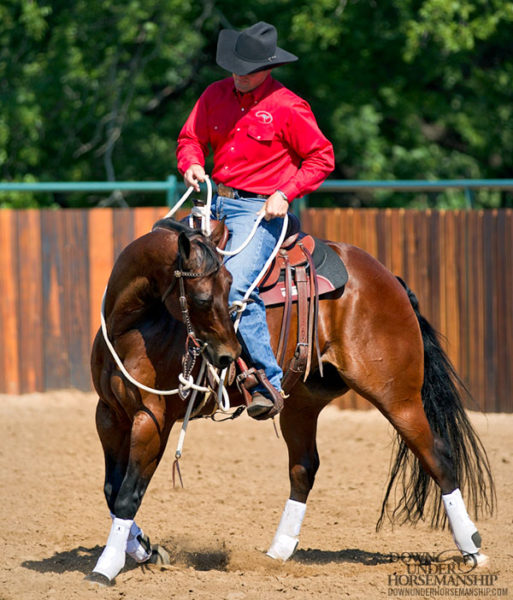
A horse never gets any lighter than the first amount of pressure you put on the reins. If you want a soft horse that responds immediately to light pressure, you have to be that way from the start. Let’s say I want the horse to flex to the side. If I always ask him with five ounces of pressure on the rein, he’ll never get any lighter than five ounces. I want to ask with just one ounce of pressure on the rein. If he doesn’t respond by flexing and bending, then I might increase the pressure to five ounces. As soon as he responds and softens his face, I release the rein. The next time I go to pick up, I’m going to ask with one ounce again, even though I know in the beginning that one ounce is probably not going to be enough pressure to ask him to bend and flex. But, I always need to give the horse the benefit of the doubt. If I always start with one ounce of pressure and finish with one ounce, eventually, one ounce will be all it takes to get the horse to flex. Think of it like this: If you always pick up kind of heavy, you’re always going to have to pick up heavy. If you pick up lightly, eventually, all you have to do is pick up lightly.
