Not Just Another Rope Halter
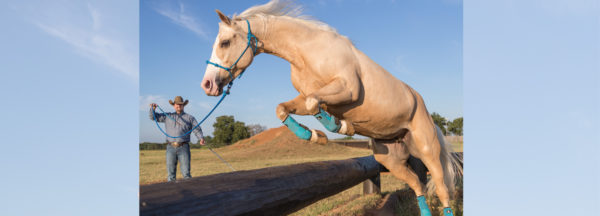
Rope halters have been around forever. That’s nothing new. But Downunder Horsemanship rope halters are a breed apart.
A Little Bit of History
The halters Clinton was accustomed to using when he was in Australia were very different from the ones he found when he first came to the United States. “Gordon McKinlay’s wife, Enid, used to make the halters we used back in Australia,” Clinton says, “and she put knots on the noseband. Not everyone did this, but it wasn’t that uncommon over there to see knots on the nosebands.”
When he arrived in the States and began working with horses, Clinton noticed three things about halters. First, while there were rope halters, none of them had knots on the noseband. Second, they were made of a thicker, softer, more pliable type of rope than Australian rope halters, and third, horses seemed to be ignoring them. “I felt like the horses all sort of leaned on them and pushed on them,” he adds. “What I knew from experience was that those knots made the halter work better, and the thinner, stiffer rope gave them more feel.”
These observations sent Clinton’s imagination to work. As someone with an instinct for innovation and a passion for making things work better, Clinton knew that if he could somehow get the kind of halters he was used to in Australia made here in the States, not only would he be able to use them on his horses, but other people might like them as well. “When I started Downunder Horsemanship, I knew I wanted to provide people with the same tools I used to train horses – tools I knew would help them be successful,” Clinton says. “Since these halters were key to gaining a horse’s respect in my groundwork exercises, I started looking for rope suppliers and people who could produce a halter for me with a thinner diameter, a stiffer rope material and with knots on the noseband.” Together, these characteristics would give the halter more feel, as well as make it more uncomfortable for a horse to lean on it.
After an exhaustive search for rope suppliers and years of trial and error, Clinton perfected his creation and brought his rope halter production in-house. Today, each Downunder Horsemanship halter is tied individually, to Clinton’s exact specifications, at the ranch in Stephenville, Texas.
What Sets the Downunder Horsemanship Halter Apart
Strategically placed knots on noseband
• Works off the pressure points of a horse’s nose, which discourages leaning against the halter
Made of high-quality, marine yachting rope
• 2,600-pound breakaway strength
• Extremely durable and will last for years in any environment
• Retains shape, won’t stretch even if the horse pulls back
1/4″ in diameter
• Thin diameter discourages the horse from wanting to lean or pull against it
Comes in 7 sizes
• Newborn, Foal, Weanling, Yearling, Small, Average, Large and Draft
• Hand-tied to Clinton’s specifications to ensure quality and craftsmanship
Learn more about the halters, including how to select the size for your horse and how to tie them correctly, on our website. Now until the end of July, when you become a premium No Worries Club member, you’ll receive a FREE halter of your choice. Learn more about the opportunity on our website.
