What Your Horse Should Know Before Trick Training
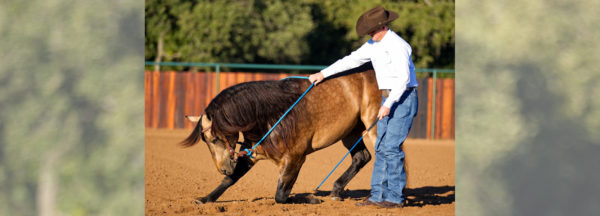
If you’re looking for a fun way to break up your summer training sessions with your horse, try teaching him some tricks. In the Trick Training Kit, Clinton works with two horses, demonstrating step-by-step how to teach and refine four basic tricks: Lay Down, One-Legged Bow, Two-Legged Bow, and Sit Up. The series starts with several foundation-building exercises that your horse will need to know before starting tricks, such as Sidepassing Toward You and Ground Tying.
Fundamentals
The first and most important requirement before starting any type of trick training is the completion of at least the Fundamentals level of the Method. It’s important that you and your horse are able to perform each exercise in the series to a B+ or higher. This will ensure several important things: 1) You have established a basic foundation of respect and trust from your horse It’s no fun to work with a horse that is constantly questioning and challenging your leadership It also no fun to work with a horse that doesn’t trust you or the tools you’re using around him The Fundamentals exercises will teach your horse to have a “Yes, sir!” type of attitude and to be willing and obedient 2) It will give you a basic level of control The more control you have of your horse’s feet and each of his body parts, the easier it will be to teach him exactly what to do as well as correct him when he makes a mistake. 3) It will teach the horse how to use the thinking side of his brain. Horses don’t naturally use the thinking side of their brain unless we help them practice using it. Teaching your horse the Fundamentals exercises will give the horse a lot of practice in thinking his way through different situations. This will be beneficial in trick training because whenever you introduce a new concept to your horse, he’ll be more inclined to be curious about it, look for the right answer and think his way through it, instead of overreacting, becoming frightened or trying to run away and avoid it.
Hobbling and Leg Restraints
Once you have the Fundamentals groundwork exercises completed, focus on the exercises in the Hobbling and Leg Restraints series. By following the techniques shown, you’ll safely teach your horse to be hobbled using various types of leg restraints such as the one-legged hobble, sidelines and rope hobbles. We teach all of our horses to be hobbled regardless of what discipline we’re taking them into because it’s part of teaching them to be a safe, well-broke horse. However, hobble training is a must before starting trick training because it teaches your horse to stay calm and relaxed while his legs are handled, picked up and restricted by your hands and other tools. Your progress in this series will be severely limited if your horse is not completely comfortable with you and your tools around his legs. Hobbling will also teach your horse to be more patient, which will come in handy when you start asking your horse to hold a position for extended periods of time.
Can your horse do complete the exercises in the Trick Training Kit without having completed the Fundamentals or the Hobbling and Leg Restraints video series? The answer is yes. However, chances are your progress will be slow, and there is a much bigger probability that you and/or your horse will get hurt. If you do your homework, the tricks end up being pretty easy. But if your horse is pushy, disrespectful, fearful, doesn’t pay attention or doesn’t respect you as the leader, this series is most likely going to be a frustrating mess for you and your horse.
Now through Sunday, June 23rd, get the equipment you need to teach your horse tricks and save big when you purchase the Trick Training Essentials and Hobbling Bundle!
