Training Tip: Is Your Horse’s Focus on the Puzzle or the Trouble?
Ian Francis used to tell me, “Training a horse is all about putting him in a mental or physical bind and allowing him to figure out the puzzle.” The only way the horse can work on figuring out the puzzle is if he’s using the thinking side of his brain and is relaxed. If a horse is using the reactive side of his brain and is not tuned in to you, he’s not going to pay any attention to what you’re asking him to do.
Just as importantly, if a horse is focused on the correction, he’ll spend more time worrying about the situation and trying to escape it than trying to figure out how to do the lesson. In other words, he’ll be thinking about the trouble, not the puzzle. People are the exact same way. It’s nearly impossible to learn something if you’re not relaxed and comfortable.
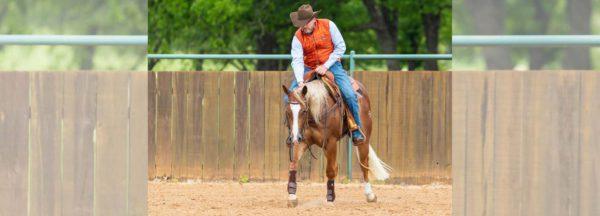
I remember running into this issue during a training session with Tyrion that I filmed for the Reined Cow Horse Series that’s available on the No Worries Club website and the Downunder Horsemanship app. My plan was to improve the Intermediate Series Stop on Whoa exercise. I had initially taught the exercise to the colt in a previously filmed session and wanted to fine-tune it. In order to do that, I trotted him forward, sat deep in the saddle and said “whoa.” If he didn’t bury his hind end in the ground and stop, I’d spin him to the left or right. After hustling his feet, I’d go back to the exercise.
The first time I asked him to stop, Tyrion did great. He buried himself into the ground as soon as he heard me say “whoa,” and took a few steps backwards. The second time, he was tardy about reading my cues and half-heartedly stopped, so I corrected him by taking him into a spin.
The third time, he was much worse, so I spun him again. On the fourth time, instead of reading my cues to stop, he immediately started to go into a spin. That was a big red flag to me that he was thinking about the correction instead of focusing on what I was asking him to do.
So I had to go backwards and reset his brain. Instead of worrying about how well he stopped, I went back to just getting him to understand that when I said “whoa,” he was to stop and get back. When he did, I’d let him stand still for a few minutes and rub on him. It was my way of saying, “Hey, don’t worry, big fella, you remember how to do this Stop on Whoa exercise.”
After a few repetitions of that, his head was back in the game and I could proceed with the lesson.
Looking for more training tips? Check out the No Worries Club. Have a training question? Send it to us at [email protected].
