Get Beyond the Basics
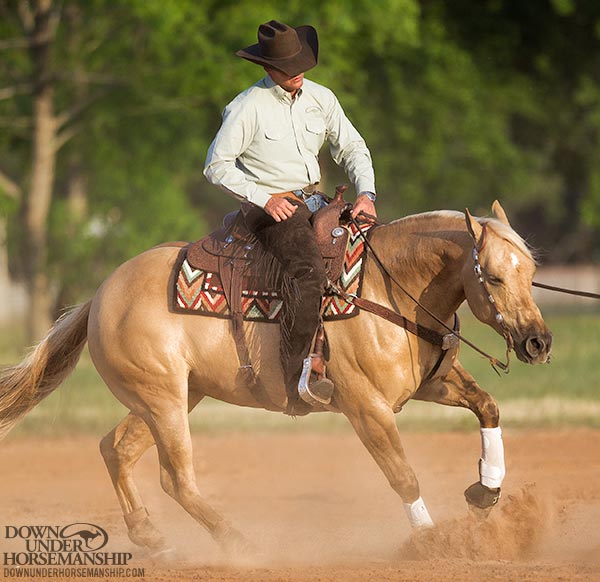
Learn how to gain even more control of your horse on the ground and achieve true lightness and suppleness under saddle. Clinton and his clinicians will give you one-on-one help in this fall’s 10-day Intermediate Clinic. The clinic is being held November 6th – 16th and will take place at the Downunder Horsemanship Ranch in Stephenville, Texas. The course will include work in the arena, on the trail and over the obstacle course. Throughout the 10 days, Clinton will cover the 33 exercises included in the Intermediate Series, such as the Outback Exercise, Sidepassing on the Fence, Bridle Bending, Rollbacks, Shoulder In/Shoulder Out, Vertical Flexion at the Walk and Trot, and Stop on Whoa.
Clinton’s retired reiners and cow horses, all of which have been trained through the Advanced level of the Method, are available for lease to No Worries Club members only for $100/day. The responsiveness, softness and willingness of Clinton’s horses will better your feel and timing and allow you to focus on developing your skills as a horseman.
Sign up to participate on the Downunder Horsemanship website. If you’ve completed a Downunder Horsemanship Clinic, the video application is waived. Contact Brittney Morgan with any questions at [email protected] or 254-552-1080.
