Training Tip: Getting the “Fresh” Off a Horse
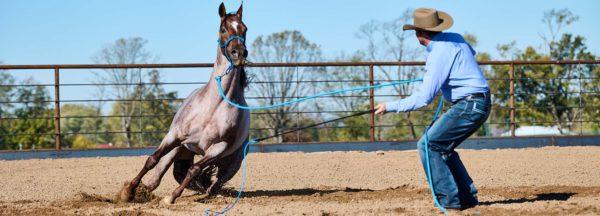
Question: If I turn my horse out during the day for him to get the fresh off, do I still need to lunge him?
Answer: Turning a horse out is good for him physically and mentally. While it’ll certainly help him “blow some steam off,” whether or not you need to do groundwork with him before riding him depends on a variety of factors.
First, it’s important to understand that lunging or doing groundwork with your horse before riding him isn’t just about getting the fresh off him. While that’s certainly part of the goal, the real focus is on getting him to use the thinking side of his brain and tune in to you. Traditional lunging—asking a horse to lope around you in circles until he’s worn out—may eventually exhaust him into the point of behaving, but it does nothing to get inside his head and prepare him for a training session.
When we do groundwork with our horses, we want to do a variety of exercises that get them moving their feet forwards, backwards, left and right and changing directions. How much or how little groundwork you do with your horse depends on the individual horse and can vary day to day.
Where is your horse in his training? If he’s a colt you’re starting or is relatively green, you’ll need to do quite a bit of groundwork with him before getting in the saddle. If he’s a well-trained horse, you may just back him up from the pasture to the saddling bay and then to the arena and he’ll be good to go.
If you’re riding in a new environment, even if your horse is well trained, you’ll likely need to spend more time than usual practicing groundwork. Horses react to unfamiliar surroundings—they’ll be more sensitive and spooky. Before getting in the saddle, you want to be sure your horse is using the thinking side of his brain and is focused on you. If he’s spooking and snorting at everything while you’re handling him on the ground, he’ll only be worse when you get in the saddle.
Weather also plays a role in your horse’s behavior and how much groundwork you need to do before riding him. If it’s a windy, chilly day, he’ll be more reactive and you’ll need to spend more time putting his feet to work on the ground. If it’s a hot, humid day, he’ll be on the lazier side of the scale and won’t need as much preparation.
Looking for more training tips? Check out the No Worries Club. Have a training question? Submit it on our website.
