Training Tip: Understanding the Drive Line
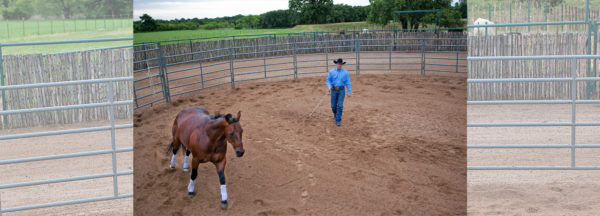
When you’re studying the Method and working with your horse on the ground, you’ll often hear me refer to the “drive line.” If you imagine that your horse is wearing a saddle, the drive line would roughly be where the girth would lie, right behind the horse’s withers.
Whenever you apply pressure or even stand behind the drive line, you will cause the horse to move forward or yield his hindquarters. Whenever you apply pressure or step in front of the drive line, you will encourage the horse to stop, slow down or change directions. To make it even simpler, think of the horse like a car: Behind the drive line is the gas pedal and clutch, in front of the drive line is the steering wheel and brake.
If you’re working with your horse in the roundpen and want him to move forward, make sure that you stay behind the drive line. Be conscious of where you are standing at all times so that you don’t give the horse mixed cues. Remember, the more black and white you can be when communicating with your horse, the easier it will be for him to learn how to respond correctly.
