Training Tip: Don’t Create a Cinchy Horse
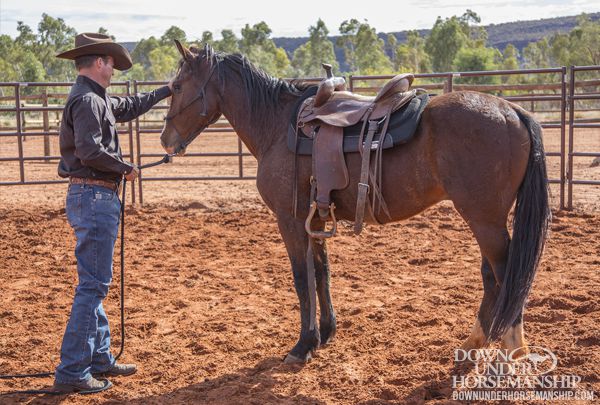
A mistake that tends to create a cinchy horse often happens the first time a colt is cinched up. If the girth is tightened too quickly, too soon, it frightens the horse and makes him feel really uncomfortable. Because he’s not used to having anything on his back, a tight cinch makes the new experience of being saddled even scarier for him, and often, this causes him to overreact and buck. Then the owner usually makes the second biggest mistake – they take the saddle off.
When I saddle a 2-year-old for the first time, I saddle him in the morning and keep him saddled all day. I turn him out in a safe area, where he can move his feet and won’t get the saddle hung up on anything. Letting the horse wear the saddle all day gives him a chance to get over being scared, and usually by the end of the day, he’s relaxed and has gotten past his initial reactiveness.
It’s very important to not take the saddle off until the horse has quit trying to get it off his back by bucking, rubbing it off on the fence, rolling with it, etc. For a horse to really accept a saddle, he has to think it’s part of his body, no different than his mane and tail.
