Training Tip: Take the Halter off Safely
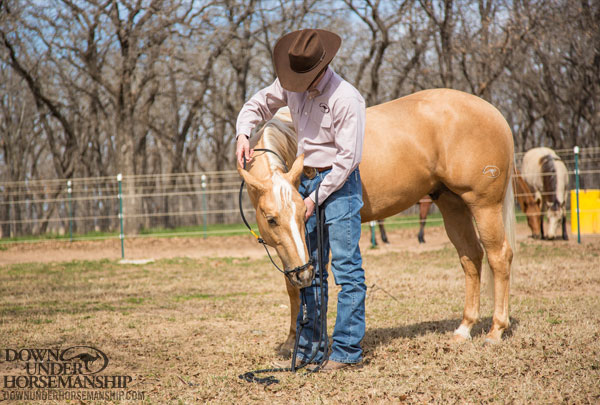
It’s a great habit to teach your horse to lower his head and then tip his head toward you when you’re haltering and unhaltering him. It’s an especially good habit when you’re turning your horse out and bringing him in. If his head is low and tipped toward you, it’s a submissive position and is the opposite of him looking off at the other horses and planning his run around the pasture. Ideally, when you take the halter off your horse, you want him to stay in position and keep two eyes on you as you walk away from him.
I teach all of my horses to lower their heads using the Intermediate groundwork exercise Touch and Rub: Poll. When the horse’s head is level with your belt, reach your right arm over his head and apply pressure to the right side of his face with your fingertips. As soon as he yields to the pressure by tipping his nose toward you, rub him in the same place you pressed. In the beginning, you can help him understand by pulling on the halter, or if the halter isn’t on, using the tail of the halter to apply pressure. If you practice doing this every time you halter and unhalter your horse, you will develop a positive habit. It won’t be long before the horse lowers his head and tips it toward you before you even ask him to.
